Your Cart is Empty
FREE SHIPPING within CANADA FOR ALL ORDERS OVER $175. We are sorry to say we are no longer shipping to the U.S.


When you’re seeking a yoga practice that feels deeply peaceful and calming, a few yin yoga poses paired with a supportive yoga bolster can bring you remarkable ease and comfort.
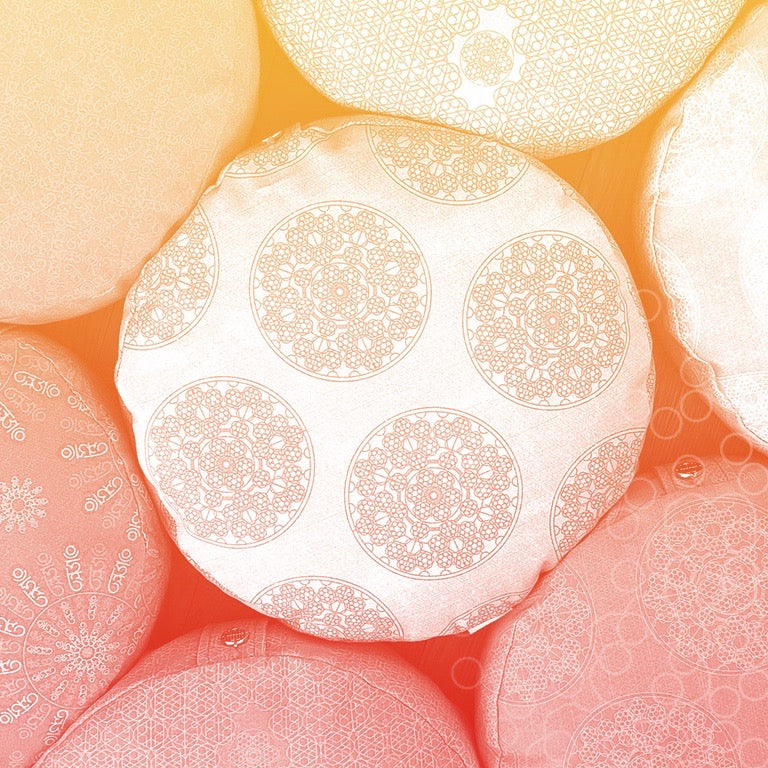
If you’ve visited HUM or followed me for a while, you already know that yoga bolsters are one of our signature products. (Take a look below to see what goes into creating one of our beautiful, handcrafted bolsters.)
Still, you might be wondering…how exactly can a yoga bolster enhance your practice?
A sturdy yoga bolster is an invaluable tool for support, greater alignment, and more comfort in your poses. It’s a versatile prop that can be used in many ways. Try lying back and draping your body over the bolster for a soothing, heart-opening backbend that supports and lengthens the spine. Or rest your torso along its length in a gentle, reclining twist to make the pose more restful and accessible. You can also place it beneath your chest or forehead in a forward fold to bridge the space between your body and the floor, helping you relax into the pose. Feeling so supported, you can let go and fully surrender to the pose.
The comfort and stability a bolster provides allow you to linger longer in each pose. That extra ease frees your mind to explore the pose from the inside out. What does this mean? When you can linger comfortably in a pose, you have the opportunity to expand your awareness to notice your breath, your alignment, and the subtle sensations in your muscles and joints. Expanding and deepening your awareness also opens a window into your emotional, mental, and spiritual layers — that still and quiet place within where your true inner peace resides.
Yoga bolsters are useful for any yoga practice and in particular are the ideal partner for your yin yoga practice when you stay for at least 3-5 minutes in your pose. The bolster’s support allows you to soften, rest, and receive the full benefits of each pose…mind, body and soul.
Which shape bolster should you choose?
Yoga bolsters come in two main shapes — round and rectangular. Both are effective and versatile, and either can be used to support a wide range of yoga poses. The choice ultimately comes down to how you like to be supported in your practice.
A round bolster naturally follows the curves of your spine, making it especially well-suited for backbends. It’s also a lovely option for placing under your knees in savasana. Because it offers a bit more height, it can be especially helpful in supported forward bends when you need a little extra space between your body and the floor.
A rectangular bolster, on the other hand, provides a flatter, more stable surface. It won’t roll the way a round bolster can, which makes it a great choice for seated poses or when you want a more grounded base. Its lower height creates a gentler, less intense backbend, though you may need to reach a little further to rest into it in forward bends.
There is room for both bolsters in your practice!
How can you use your bolster?
These images show how to use your yoga bolster for extra support and comfort in your poses. Yoga blocks can also help adjust certain poses: by placing the bolster on a diagonal with the help of two yoga blocks, you can encourage a neutral spine alignment and increase your comfort. You can also use your bolster as a seat for meditation if the height feels suitable and you don’t have a dedicated meditation cushion. A rectangular bolster tends to work best for this purpose.


And here are 3 yin poses you can add to any yoga practice.
Sleeping Swan Pose
From hands and knees, bring your right knee forward and place your right shin and knee down on the floor approximately parallel to the front of the mat. If this is too intense, place it at a comfortable angle. Both hips should be on the floor, and your back leg should be extended straight back if possible, but it is also fine to bend the back knee if this helps your hips come to the floor. Come down to rest on your forearms or directly on the floor if you can. If you need extra height for comfort, place your forearms and forehead on a bolster. To protect your right knee, flex your right foot if the shin is parallel with the top edge of the mat.
Note if your right hip doesn’t reach the floor, you have options:
When you’ve finished on the right side, be sure to practice on the left side.
Meridians: Gall bladder and liver meridian
This is good if you feel: frustration, impatience, stuck. This pose moves stagnation, calms the mind, creates patience.

Supported Wide-Legged Child’s Pose
Child’s pose is a gentle forward bend that stretches out the back body, and also calms the nervous system to relieve stress. From hands and knees, begin by bringing your big toes together and your knees wide, then sink down to sit on your heels. In the classic version of Child’s Pose, you would place your forehead on the floor between your knees and your arms down at your side. It you can’t quite reach your forehead to the floor, rest your forehead on stacked fists or forearms. You can also rest your upper body along the length of a yoga bolster; this makes the forward bend less intense and more restful. Relax and release completely.
Meridian: Bladder meridian
This is good if you feel: fear, exhaustion, anxiety. This pose offers peace, calm, rest.

Supported Reclining Butterfly Pose
This pose allows gravity to create a comfortable hip opening position and gentle stretch to the inner thigh and groin muscles. You can do this lying flat on the floor or support your back with a yoga bolsterto make the pose more restful. The bolster also creates spaciousness across the chest for a heart opening. Sit at the very end of the bolster with both knees bent, your feet together. Lean back to rest on the length of the bolster. Let your knees fall open and press the soles of your feet together. Your arms can be placed on your abdomen or alongside your body. Keep the pose soft and gentle, don’t try to push your knees down towards the floor, let gravity do the work.
Note that you make this more comfortable by raising the bolster onto a diagonal using blocks (this puts your spine into a neutral alignment) and by propping your knees on cushions or rolled-up blankets.
Meridians: Heart Meridian and liver meridian
This is good if you wish to open the heart, promote wellbeing and connection.


Comments will be approved before showing up.