Your Cart is Empty
FREE SHIPPING within CANADA FOR ALL ORDERS OVER $175. We are sorry to say we are no longer shipping to the U.S.


Continuing our journey into the deeper, more subtle layers of the yogic path, let’s now take a closer look at the fourth limb of yoga: pranayama.
Last week, we explored how to bring greater awareness into asana—feeling the poses from the inside out, balancing effort and ease. This week, we let the breath take the lead.
Did you know that breathing is the only physiological process we can both control and allow to happen on its own? We can let the body breathe automatically. Or we can consciously change the breath and use it to influence our energy levels and emotions.
This is what pranayama is all about.
In the yogic tradition the breath is not just air…it’s “prana”, the vital life force that animates everything. “Pranayama” is a Sanskrit word that means expanding and directing the breath to generate more energy within our bodies and minds. Sometimes called the “yoga of breath,” pranayama is a powerful practice to maximize our life force in order to rejuvenate the body, and as a means of self-study and self-transformation.
Pranayama helps us gain better awareness of our breath. There are many different pranayama practices that can help us stay grounded and steady, warm up or cool down, soothe frazzled emotions or boost our energy. Pranayama also helps calm the mind and body in preparation for meditation.
The first step: your breath as an anchor
One thing to keep in mind for your yoga practice is to find your anchor.
Why do we need an anchor? Think of a boat anchor: it prevents the boat from drifting off with the wind or current, keeping it safe and secure in a desired location. Just like the boat, if our mind isn’t anchored by something, it will constantly drift away from the present moment—toward the past or the future—which isn’t always useful to us.
The breath is at the heart of both yoga and meditation, and so makes an ideal anchor: easy to use because it is always present, constant, and steady. If your mind drifts or wanders, as it invariably will, just remember your anchor and gently guide your attention back to your breath, and back to the present.
One of the foundational pranayama practices: Ujjayi Breath
A great place to start your pranayama practice, Ujjayi (also called ocean breath) is a soft constriction at the back of the throat that creates a gentle ocean sound. It focuses the mind and anchors your attention during your movement practice. And the sound itself becomes a meditation.
Now let’s practice…unequal breathing (Vishama Vritti Pranayama)
This is a calming, relaxing practice that focuses on extending the exhale until it is about twice as long as the inhale. Lengthening your exhale is a key component in calming the nervous system because it directly increases parasympathetic activity and reduces the effects of stress.
Begin by observing your natural breath ratio: the length of the inhale compared to the length of the exhale.
Gradually extend the length of the exhale. For example, if you start at a ratio of 4:4 (4 counts inhale, 4 counts exhale), begin extending the exhale breath by breath: 4:5, then 4:6, 4:7, until you reach 4:8.
No need to rush. Take your time and remember that the flow of your breath should remain smooth and relaxed.
Take pauses between the inhale and exhale where they feel natural.
You might practice this for 3–5 minutes at the end of your asana practice, or even seated at your desk when you need to reset.
After the practice, you might pause for one breath and ask:
What shifts when I let my exhale be longer than my inhale?
MORE RESOURCES
Easy Breathing: An Introduction to Pranayama
Nadi Shodana: Finding Balance Through Breath
5 Breathing Practices to Relieve Stress and Anxiety
OPEN UP FOR EASY BREATHING
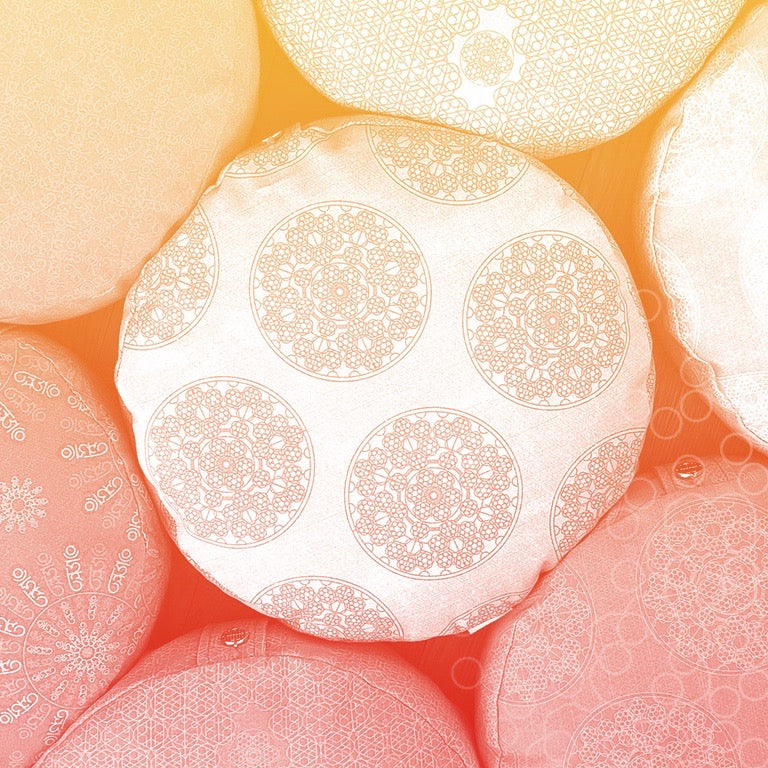
The ideal posture for pranayama is one where you can easily fill your lungs with air. You can practice pranayama sitting upright on a meditation cushion with your shoulders down and back. You might enjoy reclining on a yoga bolster, an ideal way to create space to get more oxygen into your lungs. And if you prefer, you can also practice reclined on your yoga mat, try placing one hand on your chest and one on your belly to feel the movement of breathing. Of course at HUM we can help you with all those options for a comfortable pranayama practice.

Comments will be approved before showing up.