Your Cart is Empty
FREE SHIPPING within CANADA FOR ALL ORDERS OVER $175. We are sorry to say we are no longer shipping to the U.S.


I hope our brief journey into the Eight Limbs of Yoga this month has been insightful for deepening your practice. Let’s finish with the seventh limb: meditation.
Remember that yoga is so much more than the physical practice. The Eight Limbs of Yoga outlined by by ancient sage Patanjali are like a roadmap: a structured, progressive path for ethical living, personal growth, and inner awakening. Meditation does not sit alone on the path; it rests on the foundation prepared by the six limbs that come before it.
For example, the physical practice of asana allows your body to open and settle. The breath work of pranayama calms your nervous system and quiets your mind. Together, these practices help you move toward a comfortable stillness, ready for meditation.
In the Yoga Sutras, Patanjali describes meditation as what happens when focused attention becomes so steady that it turns into an unbroken, effortless flow of awareness.
Personally, I believe that integrating meditation into your yoga journey transforms the physical practice into something deeper and even spiritual. Meditation opens a portal to your inner wisdom and allows insights to arise, not as dramatic revelations, but as quiet understandings that begin to shift how you meet yourself and your life.
Of course, starting (or returning to) meditation can bring up questions, doubts, and even a few myths (“I can’t meditate,” “I don’t have time,” “My mind is too busy”). One of the most common challenges is how to deal with thoughts. Please see this article I wrote a few months ago for some tips to help you deal with thoughts in your practice: Debunking the “Busy Mind” Myth
Let’s look at how to go deeper in your meditation.
Going deeper in meditation isn’t about longer sits or perfect stillness. It’s about creating conditions that make it easier to stay. Because you won’t get those insights unless you actually stay in meditation and practice regularly, even for just a few minutes. Here are some TIPS:
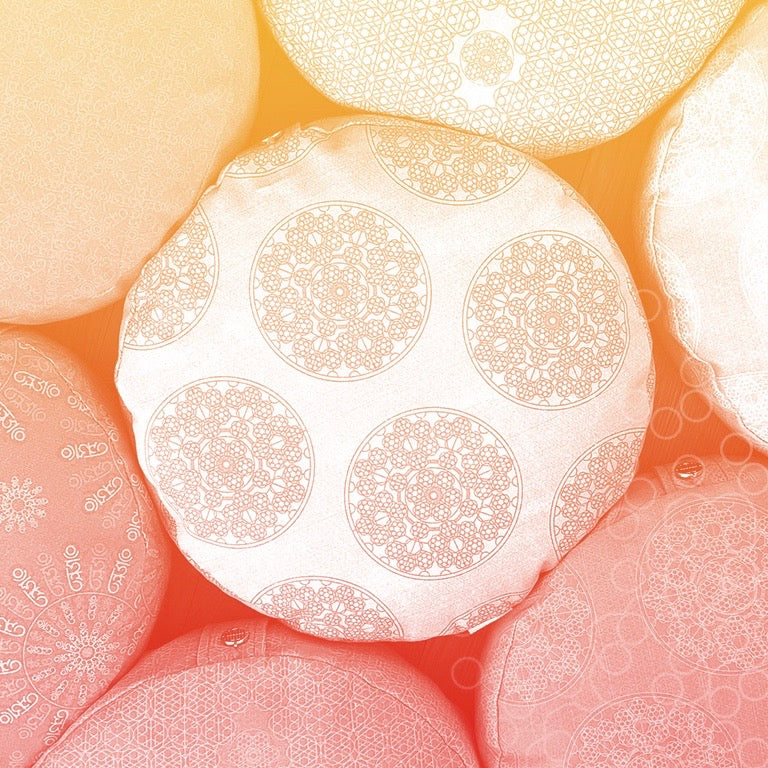
For many people, a mala becomes a helpful support for going deeper. Moving through the beads gives the hands a simple job while the mind returns to the breath or a chosen mantra, making it easier to stay present without counting or watching the clock.
Try these three simple meditation techniques.
This month, you might experiment with these three approaches. Each one can be done in just a few minutes, on or off the mat.
And while we’re ending this month with meditation, it’s worth acknowledging that the path doesn’t stop here. In Patanjali’s map, the eighth and final limb points toward the ultimate goal of bliss, a sense of oneness with universal consciousness and perhaps even enlightenment. For now, we simply keep showing up — on the mat, with the breath, and in stillness — and allow the deeper layers to unfold in their own time.
MORE RESOURCES
I’ve written extensively to inspire you and to help you build your meditation practice. Please see this link for inspiration: MEDITATION RESOURCES on the HUM LIFE Blog
Comments will be approved before showing up.